


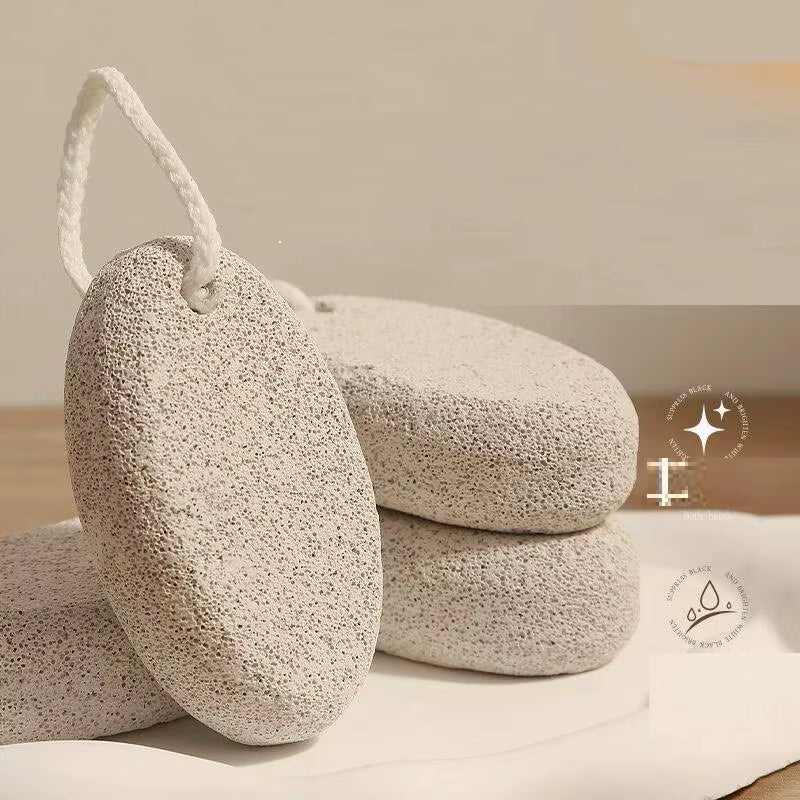

Hard skin isn't a once-a-summer problem.
Most people ignore their heels until sandal season, then attack them with a metal file and take off far too much at once. Skin builds up gradually, and it comes off best the same way. Two minutes on damp feet, a couple of times a week, and you stay ahead of it instead of starting over every few months.
Questions people ask
How do I use it?
Soak your feet for a few minutes first, or use it at the end of a shower when the skin has softened. Wet the stone, then work it over the hard areas in small circles with light pressure. Heels, the ball of the foot, the outer edge of the big toe. Rinse, dry your feet properly, and moisturise. Two minutes is plenty.
Wet or dry?
Wet, always. Dry skin tears rather than sheds, and a dry stone drags. Softened skin comes away evenly and the stone glides. If it feels like it's catching, add more water rather than more pressure.
Does hard skin grow back thicker?
Not from exfoliating as such — that's a myth. But callus is your skin responding to pressure and friction, so if you strip it all off in one go the same forces just rebuild it. Little and often keeps it manageable. If one spot keeps coming back hard in the same place, it's usually your shoes.
How often should I use it?
Two or three times a week is the sweet spot for most people. Daily is usually too much and leaves the skin tender. If your feet are very smooth already, once a week is enough to keep them that way.
Is it safe for everyone?
For most people, yes. But if you have diabetes, poor circulation, or reduced feeling in your feet, don't treat calluses at home — see a podiatrist instead. Reduced sensation means you can take off more than you realise, and small wounds on the feet heal slowly. The same goes for broken skin, open cracks, warts or anything painful. Get those looked at rather than filed down.
How do I keep it clean?
Rinse it under running water after every use and hang it up by the cord so it dries fully. Pumice is porous, so what matters is that it doesn't sit wet. Every few weeks, give it a scrub with an old toothbrush and a little soap.